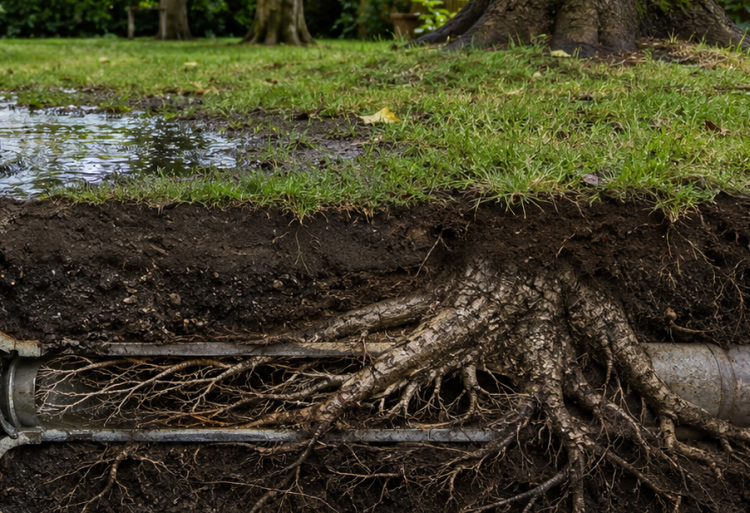
Tree roots in Twickenham drains can cause repeat blockages, slow drainage, bad smells and hidden pipe damage. Roots usually enter through small cracks, open joints or weak seals, then grow inside the pipe where moisture and waste are present.
At first, the drain may still flow. Over time, roots catch paper, wipes, grease, silt and other debris. This can turn a small pipe defect into a recurring drainage problem.
Twickenham Drains24 helps homeowners, landlords and businesses deal with root-damaged drains, blocked drains, CCTV drain surveys, drain unblocking and repair advice across Twickenham and nearby areas.
Why tree roots in Twickenham drains cause repeat problems
Roots do not usually break into a sound, sealed drain for no reason. They normally find an existing weakness, such as a cracked pipe, loose joint or damaged connection.
Once roots enter the drain, they spread through the pipe and create a blockage point. Waste then catches around the root mass, which makes the restriction worse.
This is why root removal may be needed when the same drain keeps blocking or when roots appear during drainage work.
Common signs of root intrusion
Root intrusion can look like a normal blockage at first. The difference is that the issue often returns after the drain has been cleared.
Common warning signs include:
- The same drain blocking more than once.
- Toilets, sinks or gullies draining slowly.
- Gurgling sounds from plugholes or toilets.
- Bad smells returning after cleaning.
- Water sitting in inspection chambers.
- Outside drains overflowing during normal use.
- Roots visible inside an inspection chamber.
- Silt, soil or debris appearing in the pipe.
These signs do not prove that roots are present, but they do suggest the drain needs proper checking.
How roots get into underground drains
Roots follow moisture. If an underground drain has a small leak, cracked joint or weak seal, roots may grow towards that area.
Older clay pipes, displaced joints, poorly sealed connections and damaged inspection chambers can all give roots a route into the drainage system.
Once roots enter, they can expand inside the pipe and make the original defect worse. The drain may then block repeatedly, even after clearing.
Why clearing the blockage may not be enough
A blocked drain caused by roots can often be cleared temporarily. Jetting, cutting or rodding may restore flow by removing the immediate obstruction.
However, if the root entry point remains open, roots can grow back through the same crack or joint. This means the drain may block again weeks or months later.
A drain unblocking visit can deal with the immediate problem, but further investigation may be needed if root intrusion is suspected.
When CCTV inspection is useful
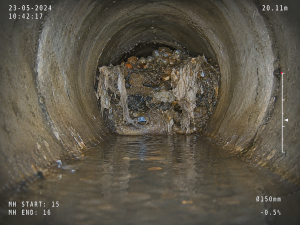
A CCTV survey can show whether roots are present inside the pipe and where they have entered. This helps avoid guesswork and gives a clearer view of the drainage fault.
A camera inspection of the drain can also show cracks, displaced joints, standing water, silt build-up, poor gradients or damaged pipe sections.
This matters because root removal may only be part of the answer. If roots entered through a broken joint or cracked pipe, repair advice may also be needed.
Roots and damaged drain joints
Displaced joints are one of the most common routes for roots to enter drains. A small gap between pipe sections can let fine roots reach the moisture inside the pipe.
As roots grow, they catch waste and restrict flow. They may also push the joint further apart, making the defect worse.
If a survey shows root entry at a joint, the engineer may recommend root removal first, followed by repair advice to reduce the risk of the same problem returning.
Roots and cracked pipes
Cracked pipework can let water escape into the surrounding ground. That moisture can attract roots towards the damaged section.
Roots may then enter through the crack and grow inside the pipe. Once this happens, the drain can suffer from repeated blockages, silt build-up and slow flow.
Where cracked pipework is present, drain repairs may be needed after the roots have been cleared.
When root removal may be enough
In some cases, root removal may restore flow and give the drain more usable life. This is more likely where the root mass is limited and the pipe condition remains serviceable.
The engineer may clear the roots and then test the drain to see whether water flows correctly.
However, if roots return quickly, the pipe has moved, or the camera shows structural damage, repair work may need to be considered.
When drain repairs may also be needed
Root removal clears the obstruction, but it does not always fix the route the roots used to enter the pipe.
Drain repairs may be needed when:
- Roots have entered through a cracked pipe.
- A joint has opened or displaced.
- The pipe has partly collapsed.
- Water escapes into the surrounding ground.
- Soil or silt enters the pipe through a defect.
- The same root problem keeps returning.
- The pipe no longer holds its correct shape or fall.
Repair options can include patch repair, lining, excavation or replacement depending on the fault, access and pipe condition.
Tree roots near buildings and drains
Tree roots can become more of a concern where drains are old, damaged or poorly sealed. The Royal Horticultural Society explains that old unsound drains can attract roots and that replacing them with modern materials can help reduce root-related problems. The RHS guidance on trees near buildings is a useful reference when considering how roots and older underground services can interact.
For property owners, the key point is simple: roots usually become a drainage problem when there is already a weakness for them to enter.
Can tree roots collapse a drain?
Roots can contribute to serious drain damage, especially when the pipe is already cracked, weak or badly jointed. As roots grow, they can widen gaps and increase pressure around damaged sections.
A drain may also suffer if water escapes through defects and softens the surrounding ground. This can reduce support around the pipe and increase the risk of movement or collapse.
Not every root problem means the drain has collapsed. However, repeated blockages and root entry should be investigated before the damage becomes worse.
Root problems in older Twickenham properties
Older properties can be more vulnerable to root-related drainage issues, especially where the underground pipework is made from older materials or has several joints.
Extensions, garden changes, driveways and previous repair work can also alter access to drainage runs. If inspection chambers are covered or pipe routes are unclear, faults can stay hidden for longer.
CCTV inspection can help confirm the pipe route, condition and likely cause of repeated root problems.
When the issue becomes urgent
Root intrusion can develop gradually, but it can still lead to urgent drainage problems. Fast help may be needed if foul water overflows, toilets cannot be used, sewage backs up or water enters the property.
Drainage problems can also become urgent for rental properties, shops, restaurants, care settings and multi-occupancy buildings where several people rely on the same system.
For urgent problems, emergency drainage services can help restore flow and reduce disruption before further investigation or repair advice is arranged.
How to reduce the risk of repeat root problems
Root problems cannot always be prevented, especially where older drainage systems already have defects. However, some steps can reduce avoidable repeat issues.
- Arrange CCTV inspection if the same drain blocks repeatedly.
- Act quickly if roots are found during drain unblocking.
- Repair cracked or displaced pipe sections where needed.
- Keep inspection chambers accessible.
- Avoid ignoring slow drainage after roots have been cleared.
- Check drains before major garden or building work near pipe routes.
- Get repair advice if roots return after clearing.
These steps help identify the cause instead of only treating the blockage.
Get the root cause checked properly
Tree roots in drains are not just a blockage issue. They often point to a defect in the pipework that allowed roots to enter in the first place.
Twickenham Drains24 can help with root removal, CCTV surveys, drain unblocking, drain repairs and emergency drainage services across Twickenham.
If the same drain keeps blocking or roots have been found inside the pipe, it is worth checking whether the drain needs root removal, repair advice or both.
FAQs
How do I know if there are tree roots in my Twickenham drains?
Warning signs can include repeat blockages, slow drainage, gurgling sounds, bad smells, water sitting in chambers, outside drains overflowing or roots visible inside an inspection chamber.
Can tree roots cause blocked drains?
Yes. Roots can enter through cracks or joints, then catch wipes, paper, grease, silt and debris. This can restrict the pipe and cause repeat blockages.
Does root removal fix the drain permanently?
Not always. Root removal can restore flow, but roots may return if the crack, joint or entry point remains open.
Will I need a CCTV survey for root problems?
A CCTV survey is useful because it can show where roots have entered, how severe the problem is and whether the pipe also needs repair work.
When are drain repairs needed after root removal?
Drain repairs may be needed if roots have entered through a cracked pipe, displaced joint, collapsed section or defect that is likely to let roots return.