A blocked drain Twickenham property owners are dealing with can quickly move from a small inconvenience to a messy, disruptive problem. Slow-draining water, overflowing gullies, unpleasant smells or toilets that will not clear are all signs that the drainage system needs attention.
Some blockages are simple and can be cleared quickly. Others point to a deeper issue such as grease build-up, wipes, tree roots, cracked pipework, a displaced joint or a problem further along the drain run.
Twickenham Drains24 helps homeowners, landlords and local businesses deal with blocked drains, drain unblocking, CCTV drain surveys, drain repairs and emergency drainage problems across Twickenham and nearby areas.
Why a blocked drain Twickenham issue should not be ignored
A blocked drain may not seem urgent at first. Water might still drain slowly, or only one sink, toilet or outside gully may appear affected. However, drainage problems often get worse if the cause remains inside the pipe.
Waste, grease, paper, silt and debris can continue to collect behind a partial blockage. As pressure builds, water may start backing up into lower fixtures, inspection chambers or outside drains.
Early action helps reduce disruption. It also gives the engineer a better chance of clearing the drain before the blockage becomes more severe.
Common signs of a blocked drain
You may notice a blocked drain in several ways. Some warning signs appear quickly, while others build gradually over time.
- Water draining slowly from sinks, baths or showers.
- Toilets rising higher than normal when flushed.
- Gurgling sounds from plugholes or toilets.
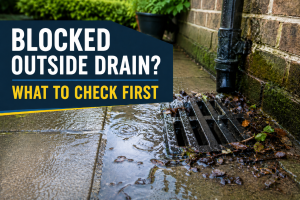
- Outside drains or gullies overflowing.
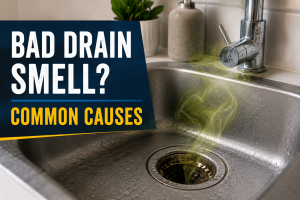
- Unpleasant smells near drains or inspection chambers.
- Water backing up when another fixture is used.
- Wet patches around external drainage areas.
- The same drain blocking more than once.
When more than one fixture has problems, the blockage may sit further along the drainage run rather than directly under one sink or toilet.
First checks before calling for drain unblocking
Before booking a callout, it can help to make a few simple checks. These checks do not mean taking risks or opening anything unsafe. They simply help you understand what is affected.
Check whether the problem affects one fixture or several. If only one sink is slow, the issue may be local to that pipe. If toilets, baths and outside drains are affected together, the blockage may sit in the external drainage system.
If it is safe to do so, look at nearby inspection chambers. A full inspection chamber can show that wastewater is backing up. A clear chamber may suggest the problem is closer to the property.
These details can help Twickenham Drains24 understand the likely issue before attending.
What not to do when a drain is blocked
It is understandable to want to fix a blocked drain quickly, but some actions can make the situation worse.
- Do not keep flushing a toilet that is already backing up.
- Do not keep running taps if water is not draining away.
- Do not pour large amounts of chemical cleaner into an unknown blockage.
- Do not lift heavy or unstable drain covers without care.
- Do not push rods into a drain if you are unsure where they are going.
- Do not ignore sewage smells, foul water or repeated blockages.
Chemical cleaners may not reach an external blockage. They can also create a safety risk for the engineer who later works on the drain.
When professional drain unblocking is needed
Call a professional when water backs up, outside drains overflow, toilets stop working, smells become strong or the same drain keeps blocking.
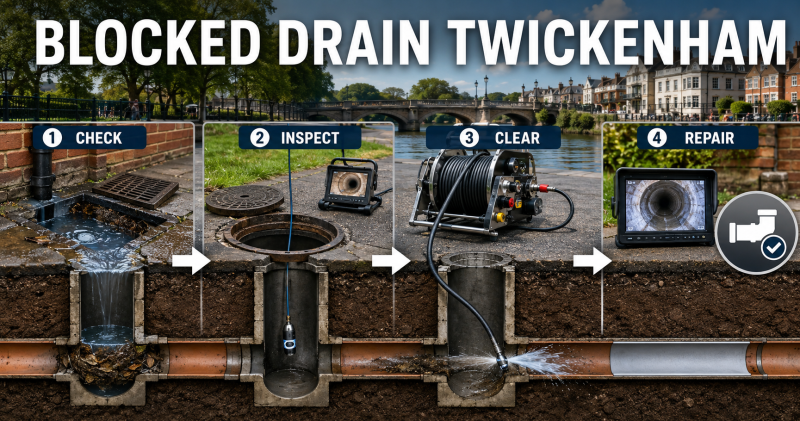
A proper drain unblocking Twickenham visit should identify the affected section, clear the blockage safely and test whether the drain is flowing correctly afterwards.
The engineer may use rods, high-pressure water jetting or other professional equipment depending on the blockage type, access and pipe condition.
Why the cause matters as much as the blockage
Clearing the blockage is the immediate priority, but the cause matters too. A drain blocked by a one-off build-up of paper or grease may work normally after clearing. A drain blocked by roots, a broken pipe or a displaced joint may block again.
This is why the engineer may look for signs such as:
- Repeated blockage in the same drain run.
- Roots or soil inside the pipe.
- Water sitting in the drain after clearing.
- Debris catching in the same place.
- Cracked or damaged inspection chambers.
- Evidence of pipe movement or collapse.
These signs can suggest that the blockage is a symptom rather than the full problem.
When a blocked drain becomes an emergency
Some drainage problems need urgent attention. If foul water is overflowing, sewage is backing up, toilets cannot be used or water is entering the property, the issue should be treated as urgent.
Blocked drains can also become more serious for businesses, rental properties, hospitality premises and multi-occupancy buildings where drainage problems affect several people at once.
For urgent drainage problems, emergency drainage services can help restore flow and reduce disruption.
When CCTV inspection may be recommended
You do not need a CCTV survey for every blocked drain. If the cause is obvious and the drain clears cleanly, the engineer may not recommend further inspection.
However, CCTV inspection can help when the blockage returns, the cause remains unclear, roots may be present, or the drain still runs slowly after clearing.
A CCTV drain survey can show cracks, displaced joints, root entry, silt, scale, poor gradients or partial collapse. It can also help locate the fault before repair work is planned.
Tree roots and blocked drains
Tree roots are a common cause of repeat drain problems. Roots can enter through small cracks, loose joints or weak seals. Once inside, they catch waste and restrict flow.
Clearing the root mass may restore the drain temporarily. However, if the root entry point remains open, the problem can return.
Where roots are found, root removal may need to be followed by CCTV inspection and repair advice.
When a blocked drain needs repair work
Not every blocked drain needs repair. Many blockages are caused by waste build-up, grease, wipes or debris. However, repair work may be needed if the pipe is cracked, collapsed, badly misaligned or damaged by roots.
Signs that drain repairs may be needed include repeated blockages, standing water after clearing, soil entering the pipe, visible pipe defects on CCTV footage or damage around inspection chambers.
The engineer may recommend patch repairs, lining, excavation or replacement depending on the fault and pipe condition.
Blocked drains and responsibility
Drain responsibility can depend on where the blockage is located. Some drains are private, while shared sewers and lateral drains may fall under the local water company’s responsibility. The UK Government provides guidance on drainage and waste disposal standards through Approved Document H, which is a useful reference for drainage layout, access and building-related drainage considerations.
If the blockage appears to sit in a shared or public section, the engineer can usually explain the next step.
How to reduce the risk of future blocked drains
Good habits can reduce the chance of future drainage problems. While they cannot prevent every fault, they help protect the system from avoidable blockages.
- Keep fat, oil and grease out of sinks.
- Only flush toilet paper.
- Use sink strainers to catch food waste.
- Keep leaves and silt away from outside gullies.
- Arrange checks if the same drain blocks again.
- Act quickly if bad smells or gurgling sounds return.
- Consider CCTV inspection before major property work near drains.
Prevention is especially important for older properties, rental homes, commercial kitchens and buildings with heavy drainage use.
Get clear advice before the problem spreads
A blocked drain can be simple, but it can also be the first sign of a deeper drainage issue. The safest approach is to restore flow, check the drain properly and decide whether further inspection is needed.
Twickenham Drains24 can help with blocked drains, drain unblocking, CCTV surveys, root removal, emergency callouts and drain repairs across Twickenham.
If you have a blocked drain in Twickenham, early action can help prevent the problem from becoming more disruptive.
FAQs
What should I do first if I have a blocked drain in Twickenham?
Stop using affected toilets, sinks or appliances if water is backing up. Check which fixtures are affected, keep clear of overflowing drains and call a drainage engineer if the blockage does not clear quickly.
Can I clear a blocked drain myself?
Minor sink or shower blockages may sometimes clear with basic methods, but external drains, overflowing gullies, toilets backing up or repeat blockages usually need professional drain unblocking.
When is a blocked drain an emergency?
A blocked drain is urgent if sewage is backing up, foul water is overflowing, toilets cannot be used, strong smells are present or water is entering the property.
Will I need a CCTV survey after drain unblocking?
Not always. A CCTV survey may be recommended if the blockage returns, the cause is unclear, roots are suspected or the drain still runs slowly after clearing.
Why does the same drain keep blocking?
Repeat blockages can be caused by grease, wipes, roots, cracked pipes, displaced joints, poor gradients or silt build-up. CCTV inspection can help identify the cause.